The Caretta-Caretta
About the Caretta-Caretta
An old traveller of the sea
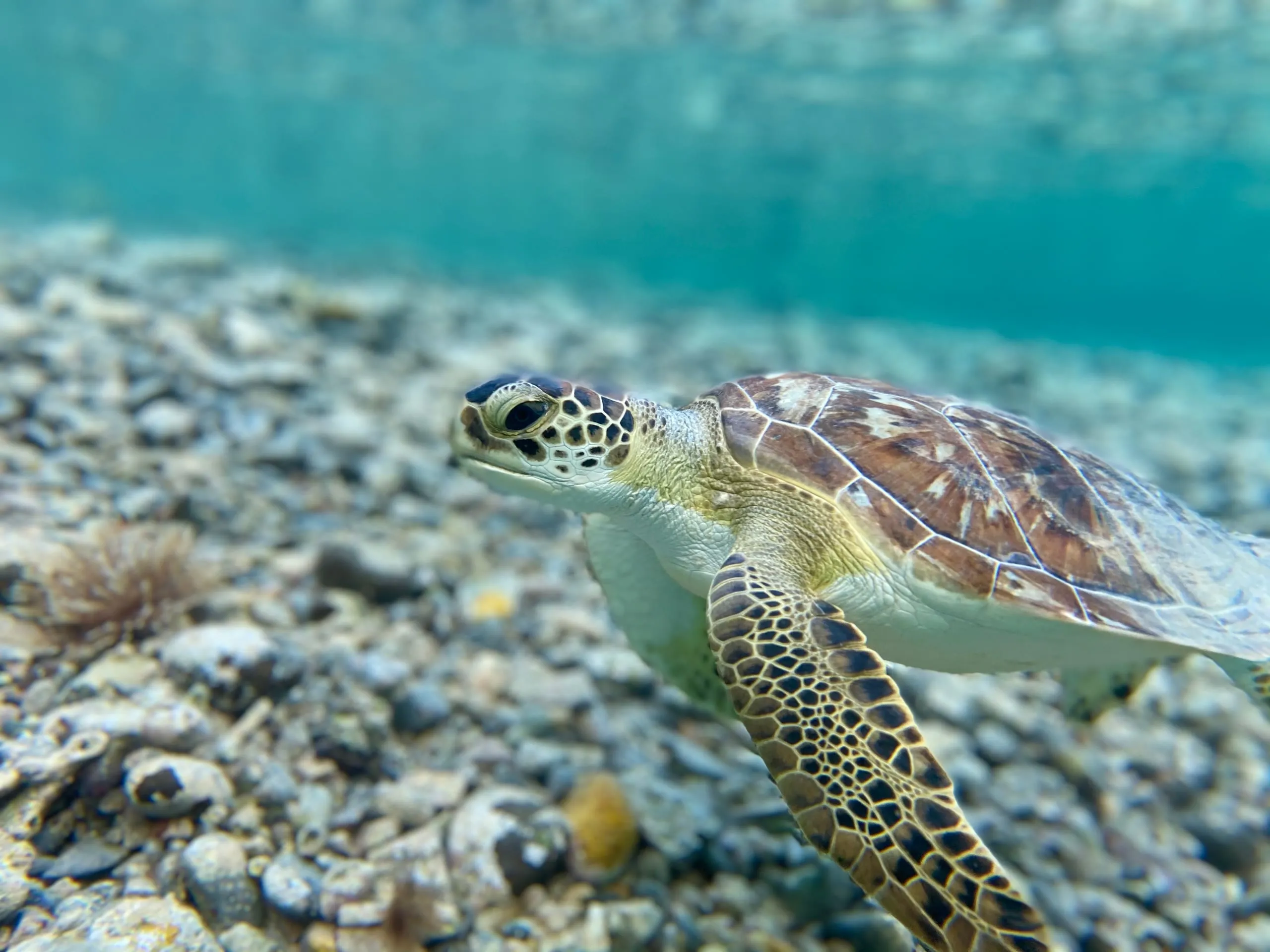
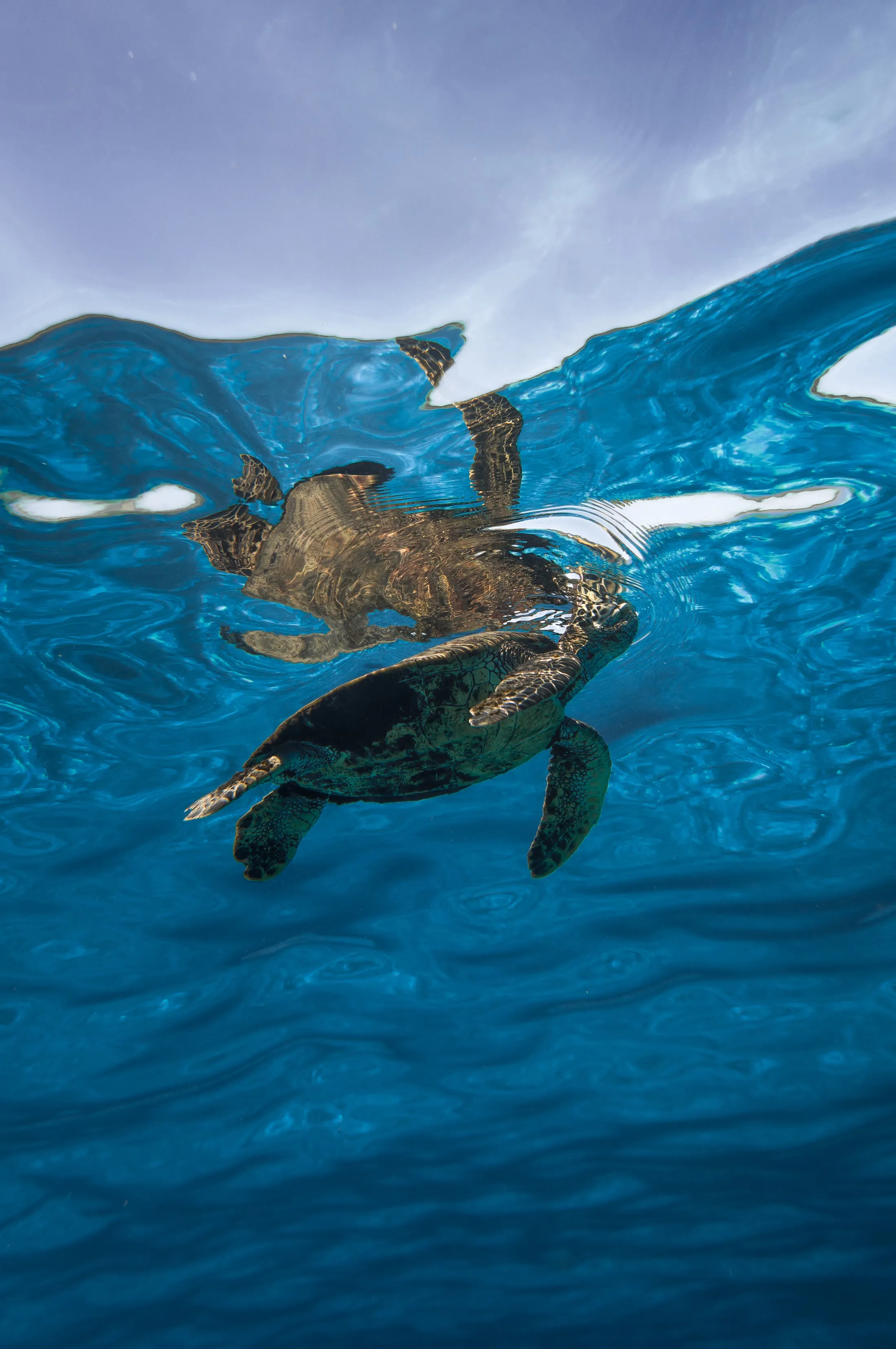
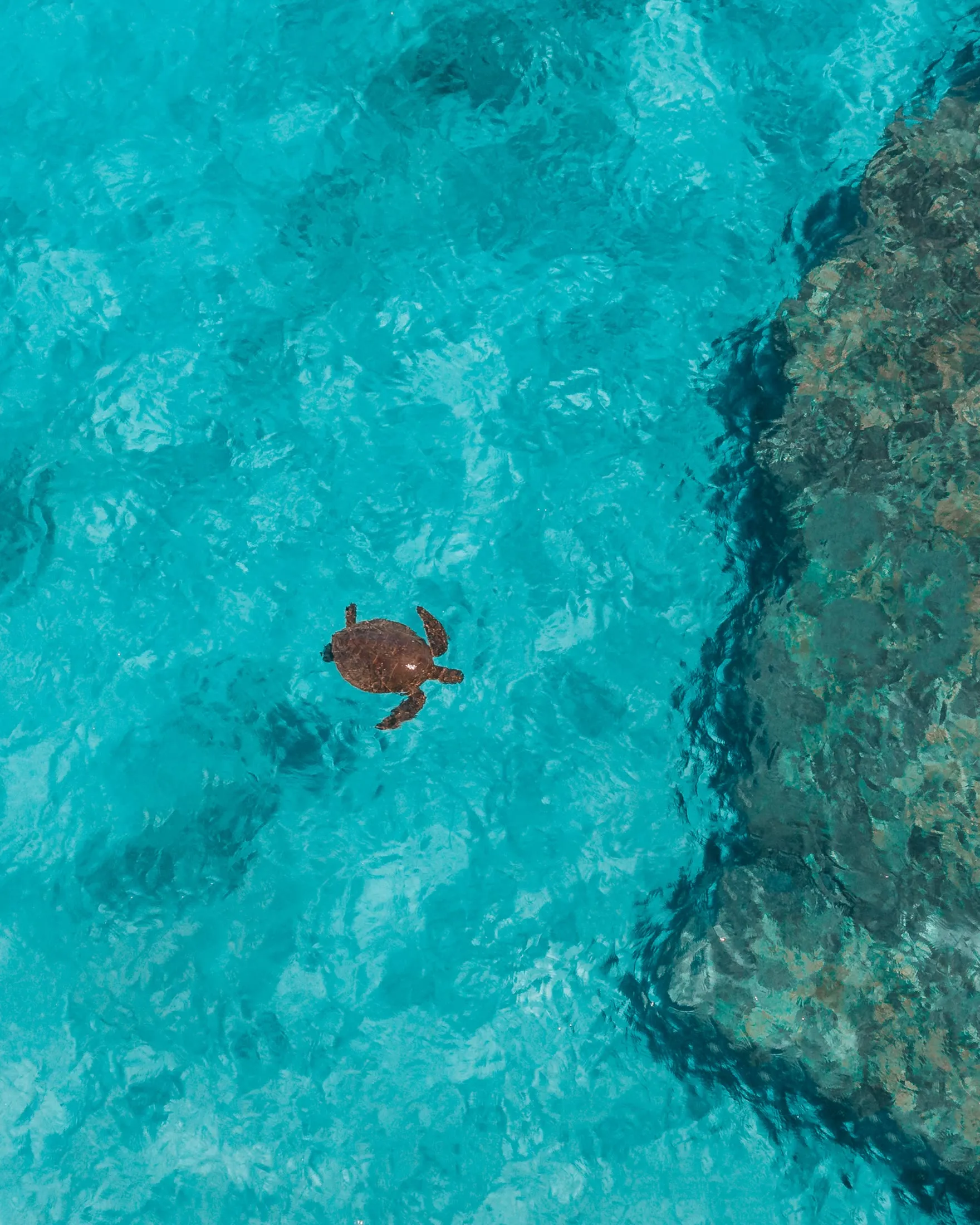
Sea turtles have crossed the oceans for more than a hundred million years. The Caretta-Caretta is known for its large head and strong jaws, which crack the shells of crabs and sea urchins. Adults can weigh more than a hundred kilos and live for many decades.
Greece and the Laconian Gulf
Greece is the most important country in the Mediterranean for Caretta-Caretta nests. Alongside Zakynthos and Kyparissia, the sandy beaches of the Laconian Gulf, Mavrovouni among them, receive nests every summer.
A summer on the sand
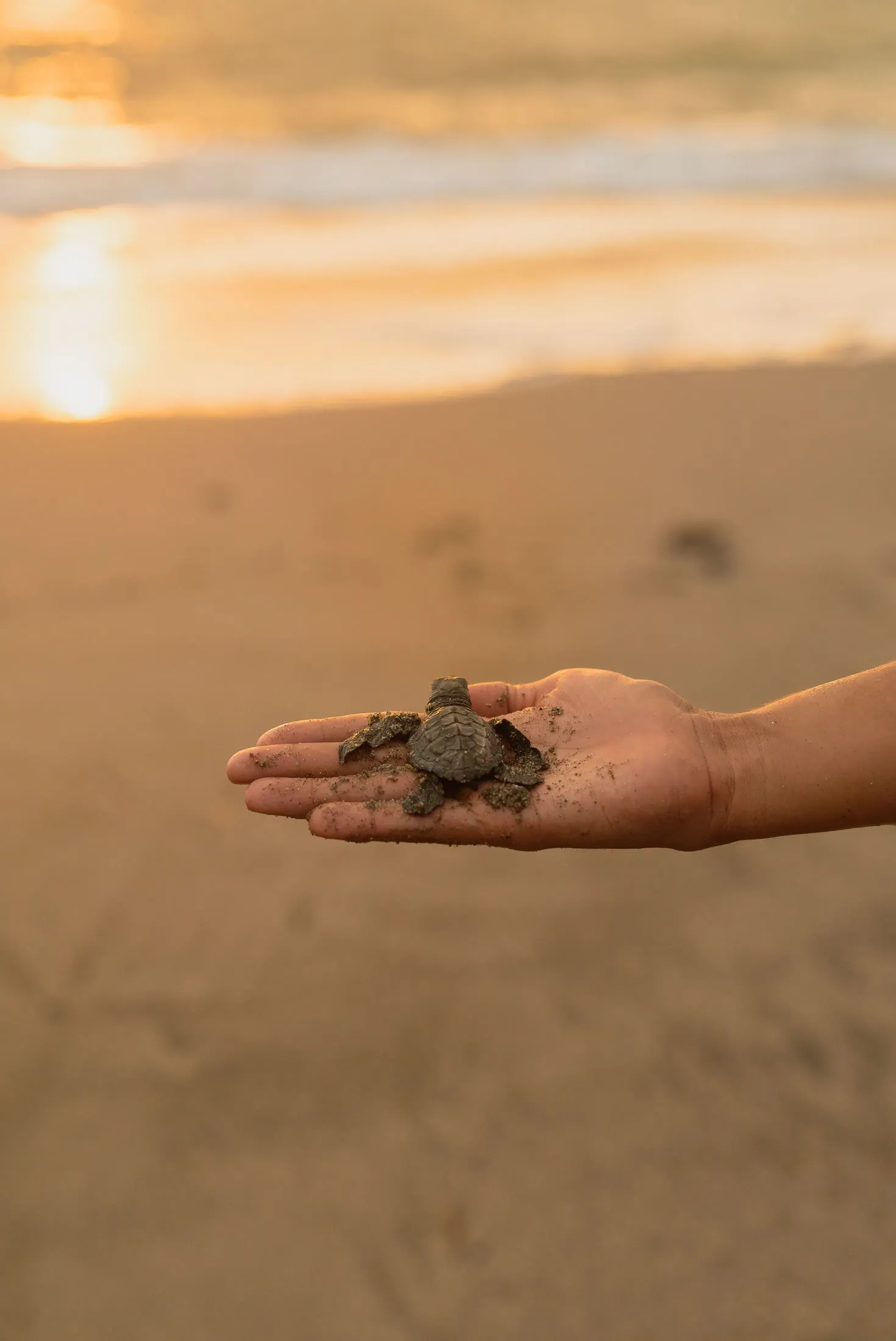
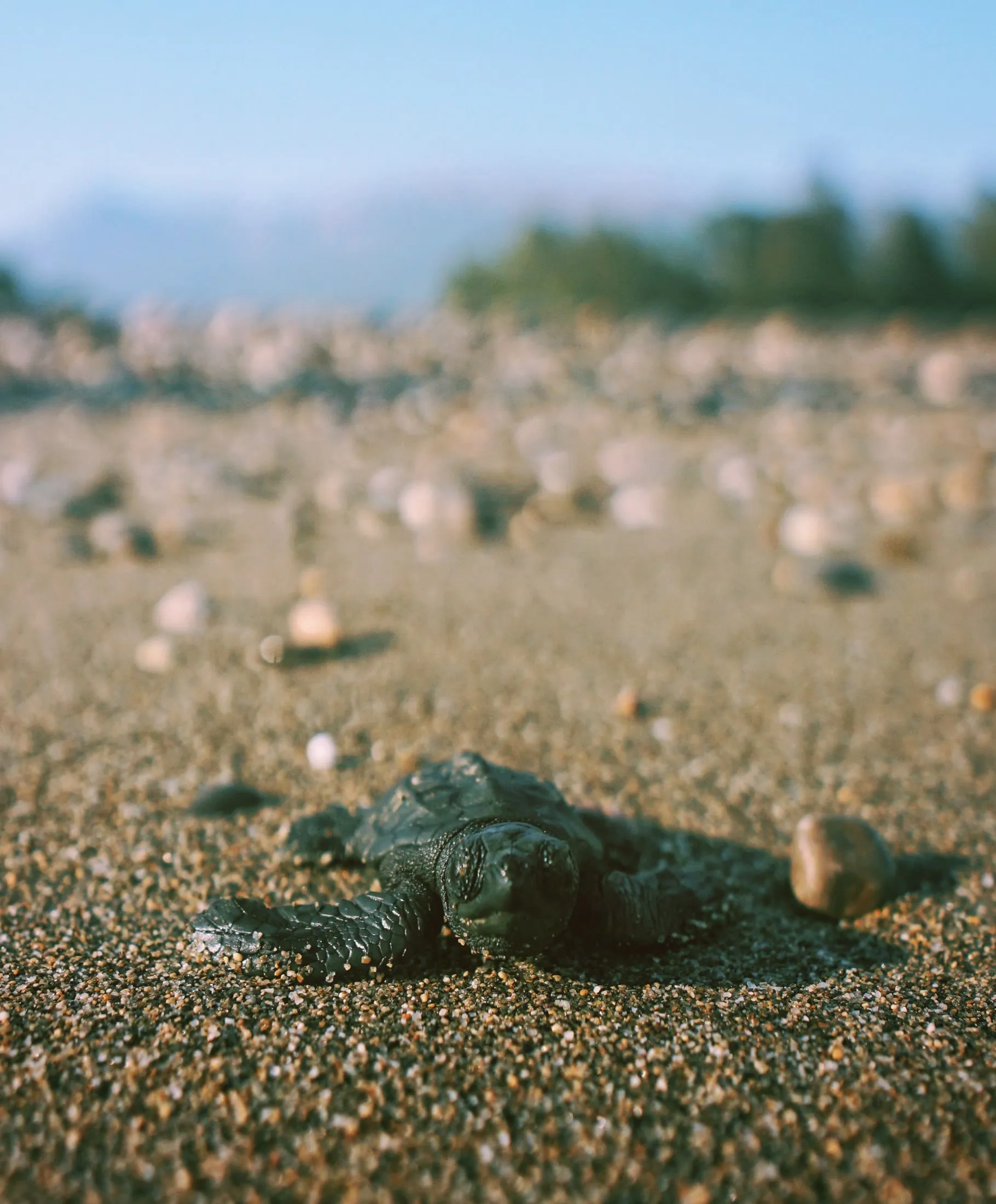
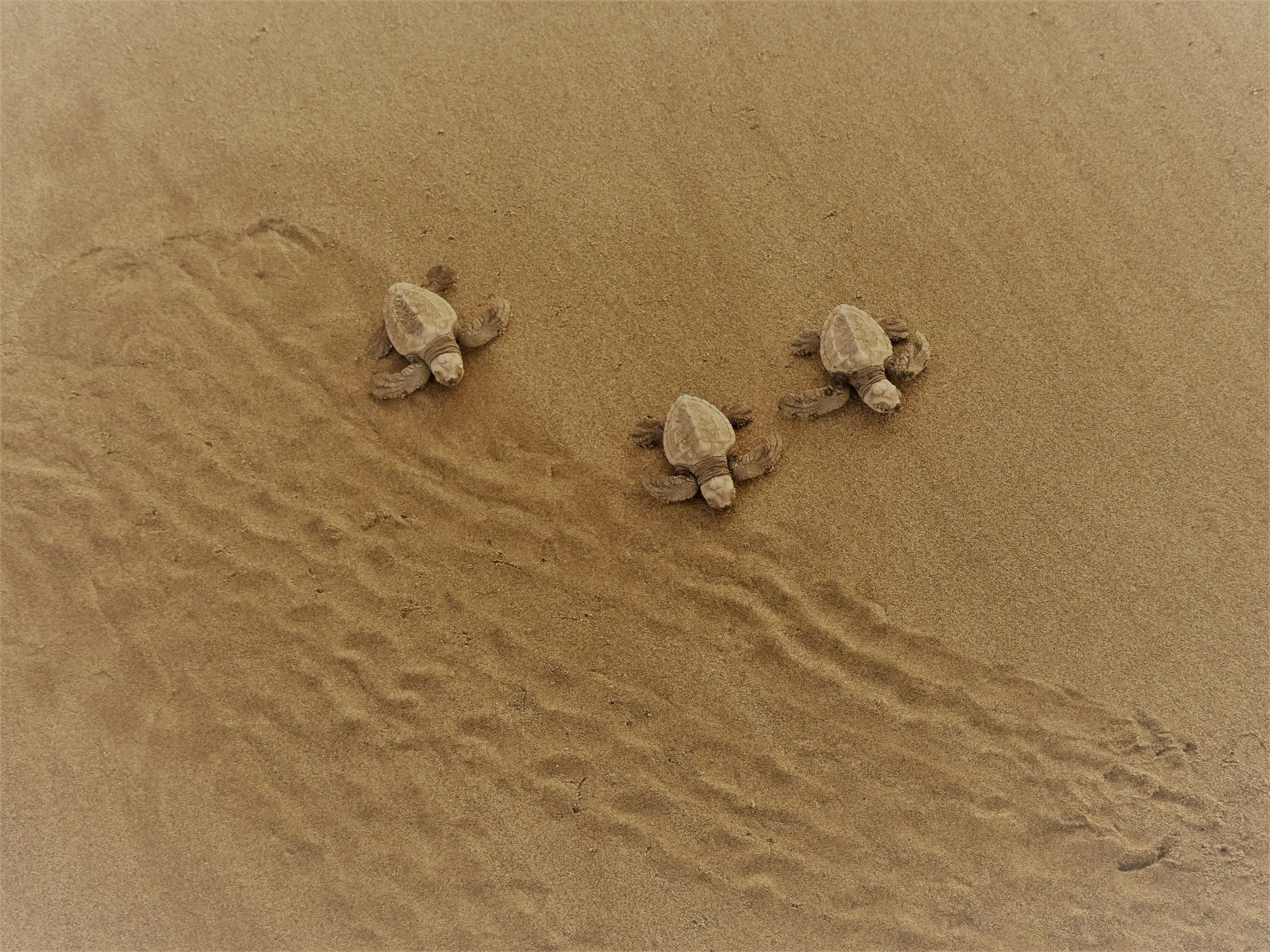
From late May to August, females come ashore at night, dig a nest and lay around a hundred eggs. The warm sand incubates them for about two months, and from July to October the hatchlings dig out, mostly after dark, and run for the sea.
How they are protected
The Caretta-Caretta is protected by Greek and European law, and its nesting beaches are part of the Natura 2000 network. Every season, conservation volunteers walk the beaches at dawn, mark each nest and protect it.
What we do, and what you can do
At Thalata the lights facing the beach stay low and warm, and nobody drives on the sand. On the beach, keep away from marked nests, fill in holes and flatten sandcastles before dark, take your litter with you, and never touch a turtle or a hatchling. If you see one, tell reception.